
Beets: Love ’em or vehemently dislike ’em
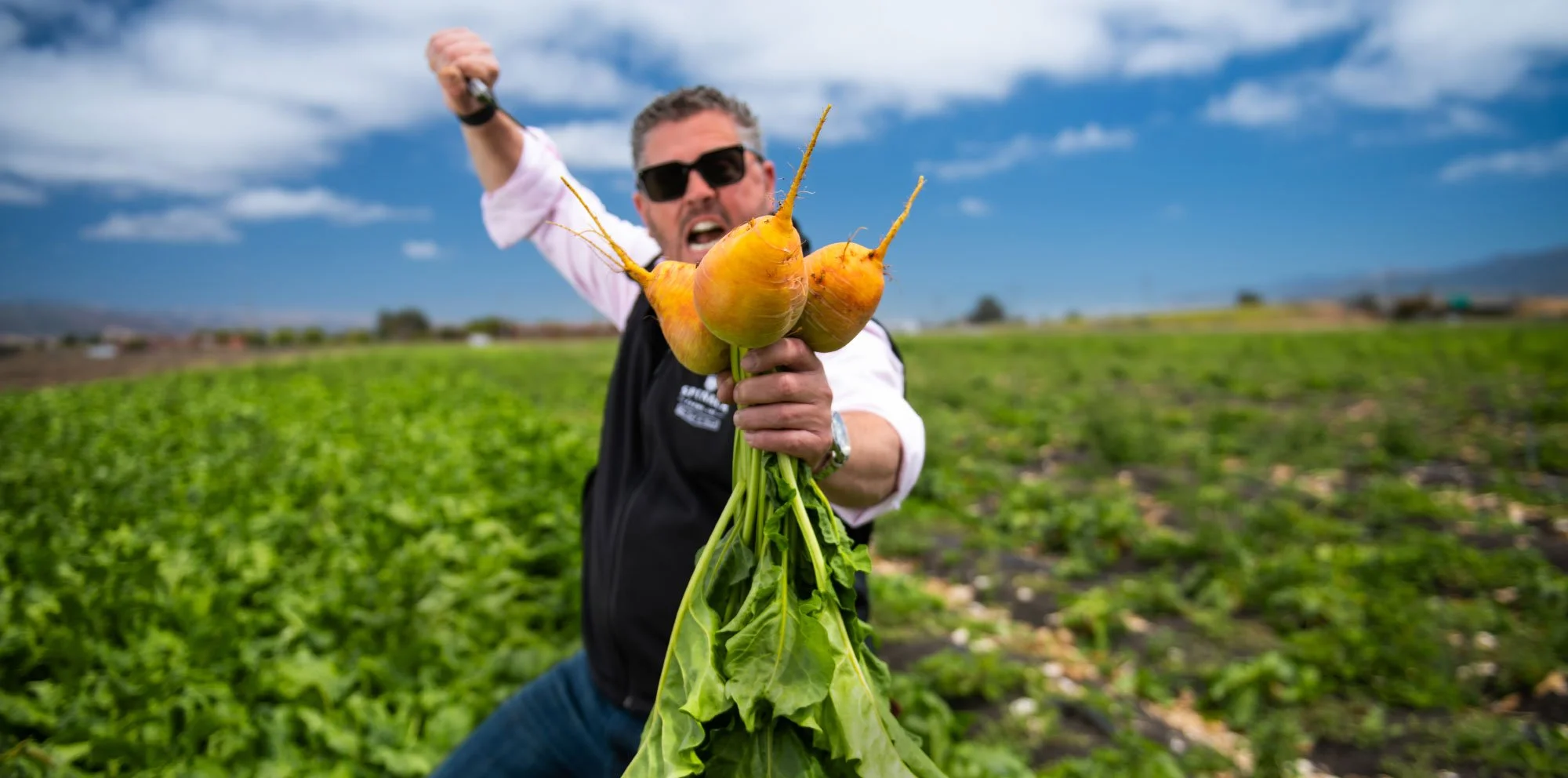
Of all the vegetables we grow, I seem to get the most unsolicited opinions—trust me—about why someone likes or vehemently dislikes beets.
Why are they so polarizing?
Early history shows that our modern-day table beet (not to be confused with its relatives, fodder beet, used for animal feed, and sugar beets, used, well, to make sugar) is an evolution of the sea beet, which was mainly cultivated for its leaves as opposed to its roots. We utilize the entire plant for our products (blog coming).
Evidence of the root being consumed as a boiled vegetable can be traced back as far as the third century BCE in Greek writings, and consumption of the vegetable spread through Mediterranean and Scandinavian countries through the 6th century. The beet made its way to the Middle East and Asia during the Age of Discovery and is widely produced there today.
I love ’em. Tops and roots.
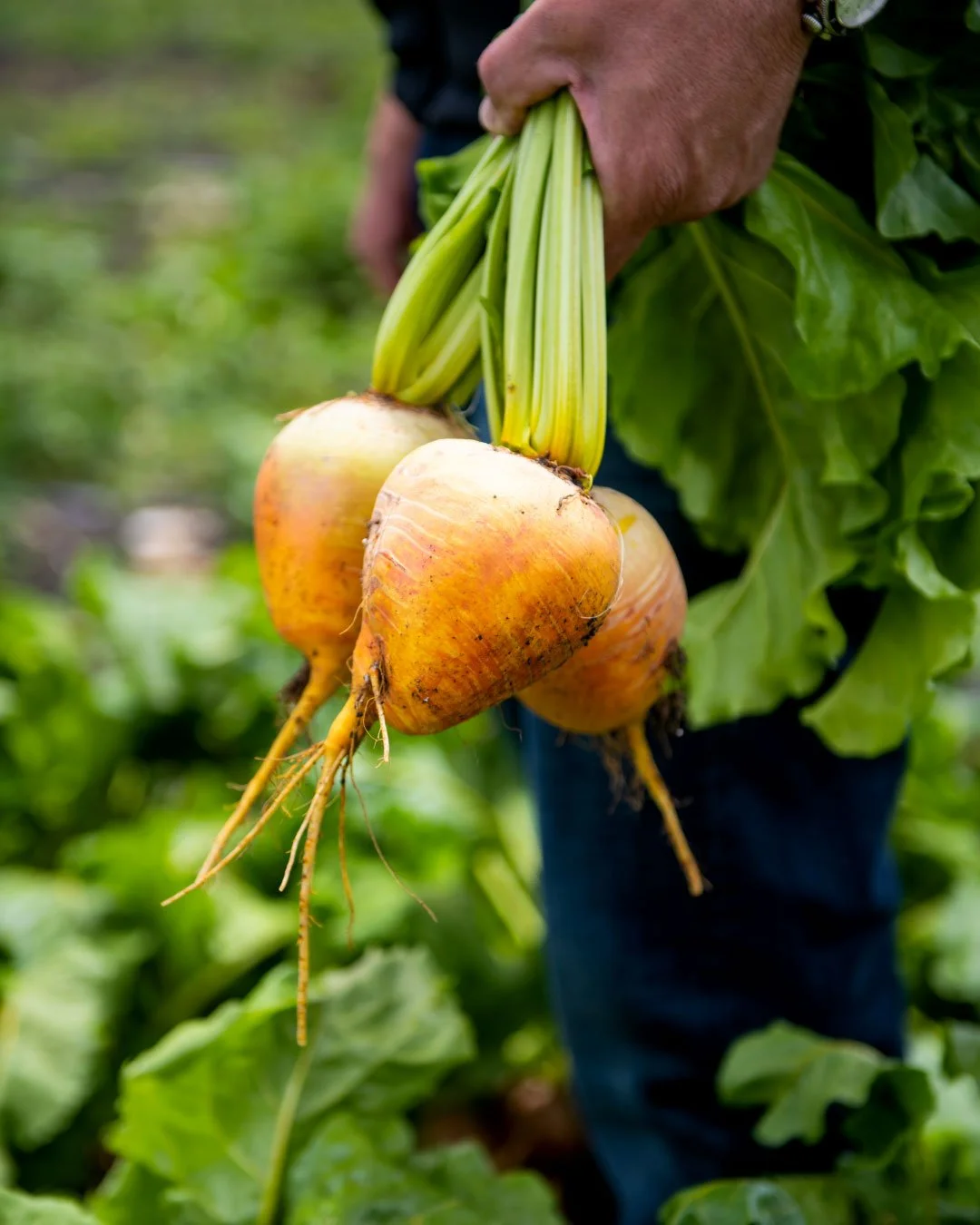
Freshly picked organic gold beets from one of our farms in the Salinas Valley
And what I love even more is the relatively unknown golden beet.
When the world thinks of beets, they think of red beets. Fresh, juiced, canned, or roasted, the red beet has reigned supreme. It’s provided sustenance for many a culture. Borscht, for example, has been supplying nourishment to Eastern Europeans for centuries. And, of course, there is debate over whose borscht is the best.
Today, I mainly see red beets roasted in salads, juiced in smoothies, or, at Spinaca, we make a powder out of them.
The red beet has also had an uptick in popularity in the exercise physiology space, often considered a natural energy boost thanks to its naturally occurring dietary nitrates. Purported health benefits include everything from lowering blood pressure and enhancing athletic performance to supporting anti-inflammatory activity, digestion, and cognitive function. Loaded with folate, potassium, vitamin C, and manganese, it would seem like the ultimate superfood.
Except…
The golden beet is nearly identical in nutrition profile, has much higher and more stable dietary nitrates (the component behind the increased athletic performance and cognitive uptick), and is sweeter, thanks to higher naturally occurring sugars. It’s also smoother in terms of its earthiness.
So, if you’re interested in all the health benefits of the red beet but want a better flavor and energy “boost,” we recommend giving the golden beet a go.
Here at Spinaca, we carry both red and golden beet powders. They’re completely soluble in water and void of excipients and fillers. They’re proudly grown and processed in the USA, with all the bells and whistles: USDA Organic Certification, Kosher, Halal, and Non-GMO.
All are produced in FDA-regulated processing facilities audited to strict SQF Food Safety Standards, with fully transparent traceability back to the ranch and lot.
So, whether you love beets, vehemently dislike them, or simply haven’t given the golden beet its due, maybe it’s time to give the other side of the beet family a try.
I’ll take mine tops and roots.